

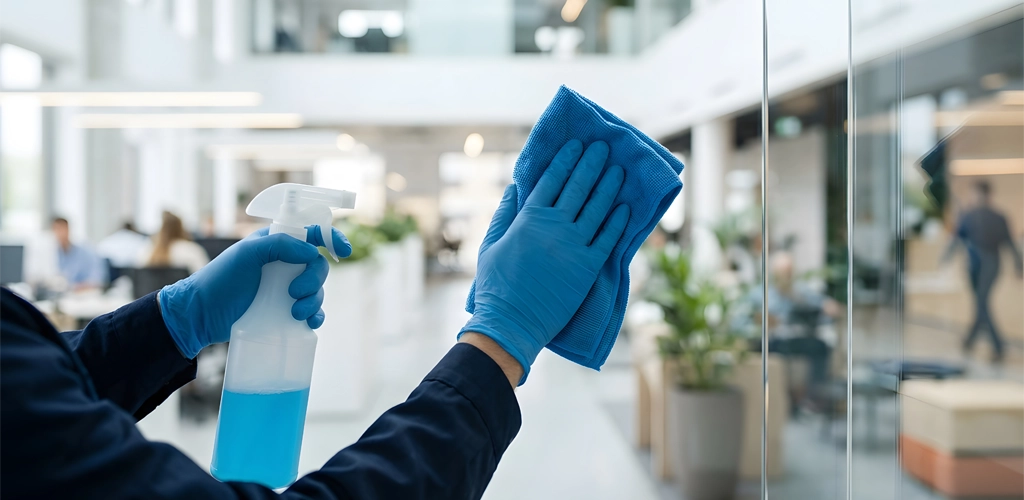
Cold and flu season brings more than a change in weather. As most busy workplaces recognize, it often means a change in cleaning priorities.
Across North America, influenza and other respiratory illnesses become more prevalent during fall and winter. Colder temperatures bring people indoors, where closer contact and reduced ventilation can make it easier for airborne viruses to spread.
At ION Facility Services, high-touch cleaning is already part of our everyday approach. But during the fall and winter months, businesses and facilities can benefit from stepping up cleaning and disinfection schedules to address these increased seasonal risks. It’s a key part of helping to protect hardworking teams, clients, and visitors.
High Traffic. Higher Priorities.
Door handles, elevator buttons, railings, light switches, washroom fixtures, kitchens and shared equipment have one thing in common: they're touched constantly.
Colds, flu and other contagious illnesses ramp up when people spend more time indoors. While respiratory viruses spread primarily through the air, contaminated surfaces can also contribute to transmission. Cleaning these areas more frequently and applying targeted disinfection provides an added layer of protection.
The key isn't simply cleaning more. It's knowing what needs attention, how often and which products and procedures are appropriate. Cleaning removes dirt and many germs from surfaces, while disinfection uses specialized products to inactivate or kill remaining pathogens.
Beyond the Usual Cold and Flu
Seasonal health risks extend beyond the common cold and influenza. Viruses such as respiratory syncytial virus (RSV) and norovirus also circulate, creating additional considerations for a facility’s overall hygiene.
Norovirus (also known as Norwalk virus) is particularly contagious and can remain infectious on contaminated surfaces for extended periods. As a non-enveloped virus, it is resistant to certain disinfectants, making proper product selection and application essential. Thorough handwashing with soap and water for at least 20 seconds is also critical, as alcohol-based hand sanitizers alone are not reliably effective against norovirus.
For facility managers, this highlights why science-backed cleaning protocols matter. Understanding how pathogens spread, selecting disinfectants with proven effectiveness, following manufacturer-specified contact times and adjusting cleaning frequency when necessary are all part of a well-managed facility.
A Smarter Solution
Every facility has different demands. Some require additional attention to washrooms and shared spaces, while others benefit from increased cleaning frequency throughout the day or additional hand sanitizing stations.
We work with clients to adjust their existing cleaning or maintenance programs, focusing resources where they'll have the greatest impact. No unnecessary extras or a one-size-fits-all approach. We offer simple, informed cleaning practices that respond to the needs of each unique building and its traffic.
This also includes attention to indoor air quality. Respiratory particles can accumulate in crowded indoor spaces that have inadequate ventilation, and this increases the risk of airborne transmission. Proper ventilation, effective air filtration and regular HVAC maintenance can help reduce the concentration of these particles in shared spaces.
It's another reason a comprehensive approach to facility maintenance matters, from the surfaces people touch to the air they breathe.
At IONFS, we have 20 years of experience with established cleaning and disinfection processes, as well as a variety of popular maintenance supports. We help facilities stay ahead of issues and keep health and wellness front and centre. Connect with us and ask how we can help.


